.jpg)
Veri to make e-methanol on Shetland, UK by 2030
Veri Energy has a project to produce e-methanol from wind power and biogenic CO2 in Shetland, UK. It is expecting FID in 2028, first production in 2030, and is now welcoming discussions with customers
Veri Energy, a subsidiary of oil and gas operator EnQuest, is planning to produce e-methanol on the Shetland Islands, UK, using wind power and biogenic CO2.
The project expects a final investment decision (FID) in 2028, for first production in 2030 of 30,000 tonnes per annum (tpa).
The company is happy to engage in discussions with potential buyers, including from maritime.
The pre-FEED (Front End Engineering and Design) studies began in April 2025. FEED is expected to begin in Q4 of 2026.
Production could be increased to 90,000 tpa by 2032 as part of a second phase of the project. There is significant additional upside potential with further wind developments planned on Shetland, both onshore and offshore.
The Shetland Islands, off the North coast of Scotland, may be very familiar to many tanker operator readers, as the location of the Sullom Voe tanker terminal. This exported 1.5m barrels of oil per day at its peak in 2001. Today it is just 40,000 barrels of oil per day.
As well as being operator of the Sullom Voe Terminal, EnQuest also has number of production assets in the surrounding Northern North Sea.
Veri is actively considering maritime customers for the e-methanol, who are seeking to meet Fuel EU Maritime requirements.
The Veri team are also exploring e-methanol as a feedstock for producing Sustainable Aviation Fuel (SAF), with facilities at Grangemouth under consideration.
If the maritime industry’s requirement for low carbon fuels can now be taken for granted under FuelEU Maritime legislation, then the big question is whether the e-methanol will be competitive with other fuels.
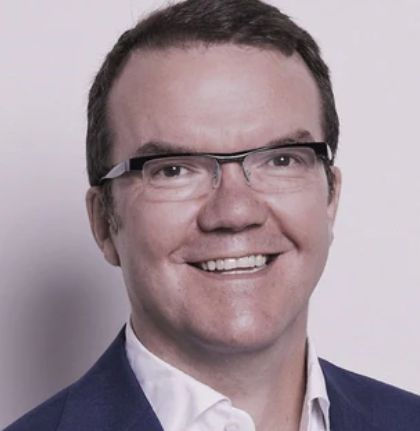
Veri Energy believes it will be able to produce at landed UK cost to countries such as China and India, says Gavin Templeton, CEO of Veri Energy. And UK and EU shipping companies may also prefer to work with a local supplier, for logistical reasons.
Making e-methanol
E-methanol is produced from hydrogen and carbon dioxide and must be produced with very little net carbon emission to the atmosphere.
Veri’s e-methanol will meet the EU Renewable Fuels of Non-Biological Origin (RFNBO) standard for carbon intensity.
Veri Energy produces the hydrogen from electrolysing water using electricity from wind.
Shetland has one of the best wind resources in Europe making it an ideal location for producing e-fuels. Onshore wind capacity factors on Shetland are around 52 per cent. This compares to a UK offshore average of 40 per cent.
In addition, Veri are planning to procure the power via a private wire from an onshore wind farm adjacent to the Sullom Voe terminal, currently in development.
A private wire arrangement involves the direct supply of electricity from a generation source to an end-user via dedicated infrastructure, bypassing the public grid.
This structure typically avoids transmission and distribution network charges, as well as certain grid-related levies, resulting in lower and more predictable power costs.
For the biogenic carbon dioxide, Veri has a memorandum of understanding with a Scottish company called Carbon Removers, which is collecting CO2 from whisky distillation in North Scotland. The CO2 can be delivered to Shetland by tank container. There will certainly be enough biogenic CO2 available this way for the first phase of the project, Mr Templeton says.
Veri Energy’s plans will enable the existing skilled workforce and Shetland supply chain to transition from oil and gas into new low-carbon activities, supporting the energy transition. As plans develop, Veri will continue working with SVT owners to identify optimal locations that complement existing operations, including ongoing decommissioning.
The project team are already looking at opportunities to expand production to other sites where there are high levels of wind. One possibility is Flotta, on the neighbouring Orkney Islands, where there is an active oil terminal. It is in discussion with other potential suppliers of biogenic CO2.
Other Veri projects
Veri Energy plans to operate its own CO2 storage, using the large, depleted gas fields around the terminal, with CO2 delivered to Sullom Voe by tanker.
In future, the e-methanol production could be connected with the CO2 storage projects, by storing biogenic CO2 in the subsurface, or using captured CO2 to make e-methanol. The CO2 storage project is running to a different timeline, planning capture sometime after 2032.


Comments